What Kinds of Materials Can Chin Implants Be Made From?
Quick Answer
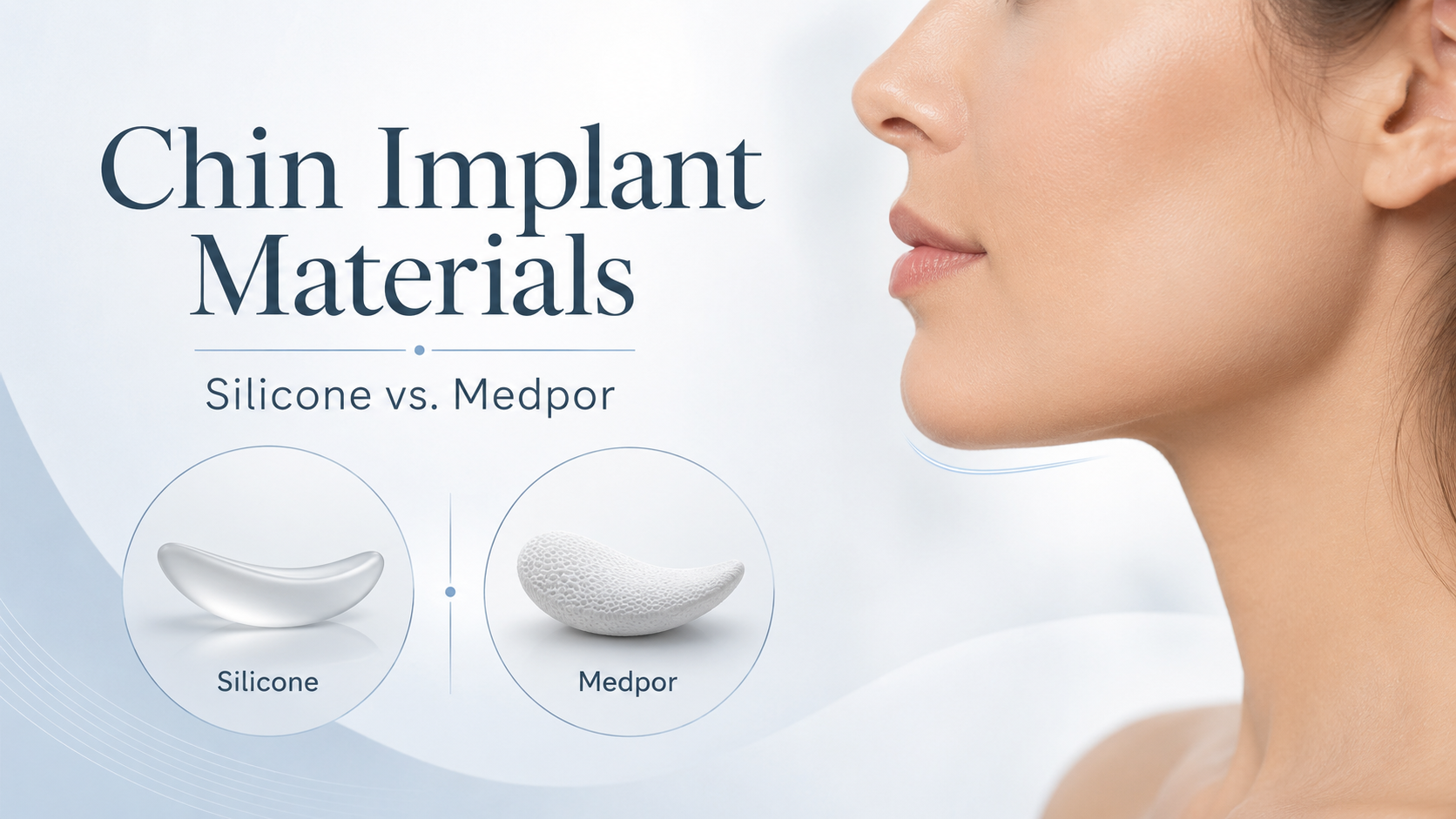
Chin implants are most commonly made from solid silicone or porous polyethylene (often called Medpor), and the main difference is how they interact with your body—silicone is smooth and sits in a precisely created pocket, while Medpor has a porous structure that allows tissue to grow into it for added stability; both can produce natural-looking results, but the best choice depends on your anatomy, goals, and your surgeon’s preferred technique.
Solid Silicone Chin Implants
Many chin implants are made from solid silicone. These implants are smooth, flexible, and available in different sizes and shapes. During surgery, the implant is placed into a carefully created pocket over the chin bone. That pocket is designed to fit the implant closely so the surrounding tissue can help keep it in the correct position.
Silicone chin implants can work well for many patients. They are familiar to many surgeons, come in a wide range of styles, and can often be removed or exchanged more easily than implants that allow more tissue ingrowth.
The possible downside is that silicone does not bond to the surrounding tissue. Because the surface is smooth, the implant depends heavily on accurate pocket creation and proper positioning. If the pocket is too large, the implant is not seated well, or healing does not go as expected, the implant may shift, become easier to feel, or sit in a less ideal position.
Porous Polyethylene Chin Implants, Also Called Medpor
Another option is a firm porous polyethylene implant, commonly known as Medpor. This type of implant has a porous structure, which allows surrounding tissue to grow into the surface over time. That tissue ingrowth may help the implant feel more stable once healing is complete.
Medpor-type implants can also be secured to the bone with one or two small screws when appropriate. This fixation can be useful when precise placement and long-term stability are priorities.
This is the technique I generally prefer for many facial implant cases. These implants can be slightly more technically demanding to place, but when properly selected, positioned, and secured, they tend to feel very stable.
How Silicone and Medpor Chin Implants Compare
The biggest difference is how each material stays in place.
A silicone chin implant is smooth and is usually held by the pocket created during surgery. A Medpor-type implant has a porous surface that allows tissue ingrowth and may also be fixed to the bone.
That does not mean one material is automatically best for everyone. Silicone may be a good choice for some patients, especially when a smooth implant fits the anatomy well and future removability is an important consideration. Medpor may be preferred when stronger fixation and long-term positional stability are especially important.
The right answer depends on the patient, not just the material.
What Your Surgeon Looks at Before Choosing a Chin Implant
Choosing a chin implant is not only about picking silicone or Medpor. The surgeon also has to evaluate how the implant will fit the face.
Important factors include:
- Current chin projection
- Jawline width
- Facial proportions
- Skin and soft tissue thickness
- Chin height and shape
- Bite relationship
- Smile and lower-lip movement
- Whether the goal is subtle refinement or a more noticeable profile change
A chin implant should not simply make the chin bigger. The goal is to improve balance between the chin, jawline, lips, nose, and neck. A well-planned implant should look like it belongs to the patient’s face.
Can Chin Implant Material Affect Revision Surgery?
Yes. Implant material can affect how revision surgery is approached.
Because silicone implants are smooth, they may be easier to remove or exchange in some cases. Medpor-type implants are designed to integrate more with surrounding tissue, which can make them very stable. However, that same tissue ingrowth can make removal or revision more involved.
This is why it is important to discuss not only the expected cosmetic result, but also how the implant is placed, how it is stabilized, and what the long-term considerations may be.
Which Chin Implant Material Is Best?
The best chin implant material depends on your anatomy, goals, and the surgeon’s experience with each type of implant. There is no single material that is best for every face.
During a consultation, your surgeon can evaluate your chin from the front, side, and three-quarter views. They can also look at how the chin relates to the nose, lips, jawline, and neck. From there, they can explain whether silicone, Medpor, or another approach is most appropriate.
The goal is to choose an implant material and technique that support stable placement, natural facial balance, and a result that fits your features.