
What Symptoms Can Large Breasts Cause?
Quick Answer: Large breasts can contribute to neck, shoulder, and upper-back discomfort, deep bra-strap grooves, recurring skin irritation beneath the breasts, and difficulty with some physical activities. These symptoms can have other causes, so breast size should not automatically be assumed to be the reason. Pay attention to whether symptoms keep returning, worsen during certain activities, or continue despite supportive measures such as a properly fitted bra.
What Physical Symptoms Can Large Breasts Cause?
For some women, the weight of large breasts can contribute to discomfort in the neck, shoulders, and upper back. Symptoms may become more noticeable after several hours of standing, walking, working, or exercising. One person may notice shoulder soreness and bra-strap grooves later in the day, while another may mainly experience upper-back discomfort during physical activity.
The pattern matters more than one isolated episode of pain. If the same discomfort repeatedly appears during certain activities, improves with support or rest, and then returns, breast weight may be one factor worth discussing with a healthcare professional. Neck, shoulder, and back discomfort can also have other causes, so persistent or worsening symptoms should be evaluated rather than self-diagnosed.
Can Large Breasts Cause Bra-Strap Grooves or Skin Irritation?
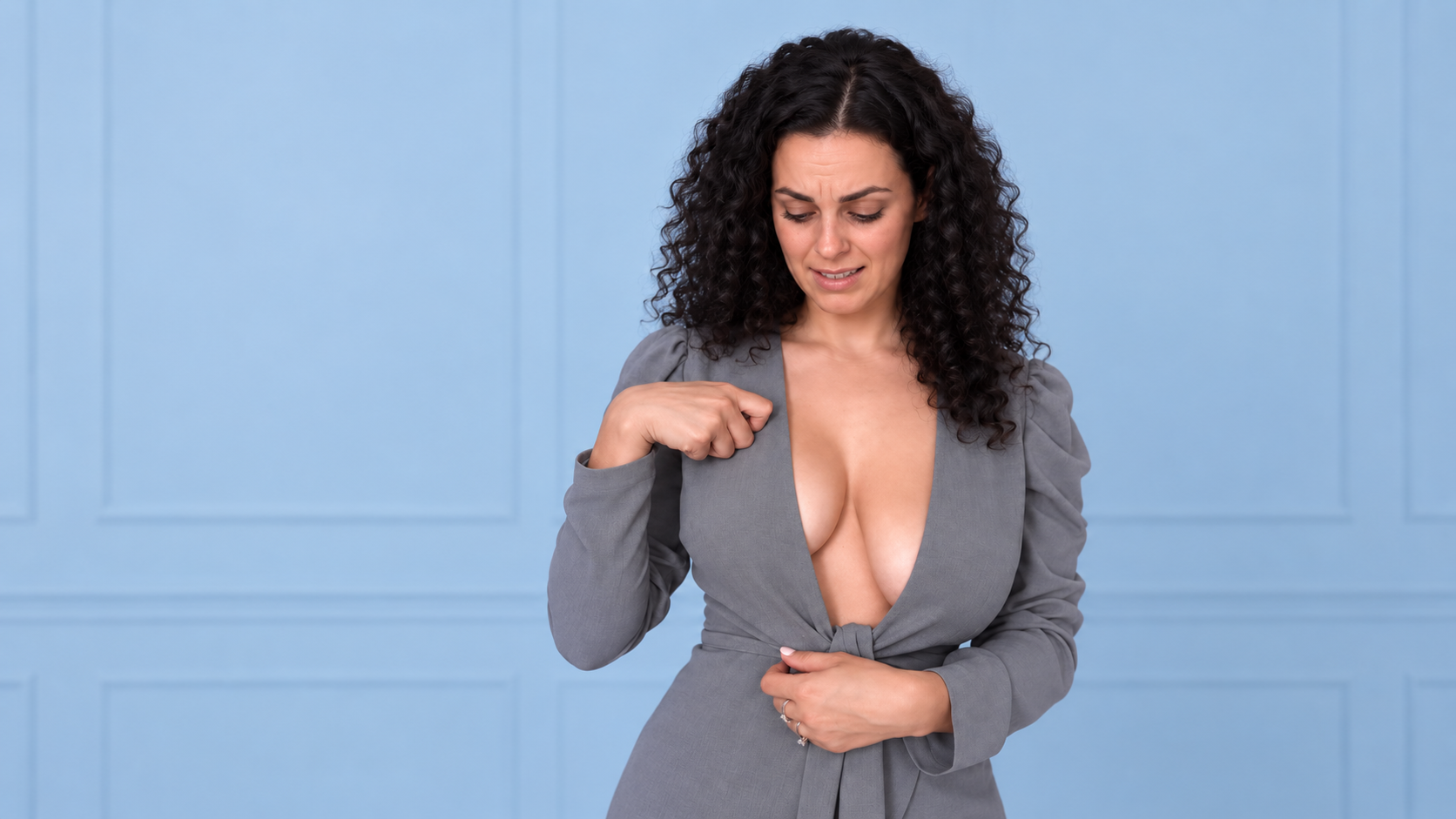
Yes. Heavier breasts can place more pressure on bra straps, which may lead to visible grooves, tenderness, or sore areas across the shoulders. A properly fitted supportive bra may reduce some of this pressure, but it may not completely relieve symptoms for everyone.
Skin beneath the breasts can also become irritated when heat, moisture, and friction collect in the fold. This may cause redness, soreness, or recurring irritation, particularly during warm weather or physical activity. Mayo Clinic and the American Society of Plastic Surgeons both identify shoulder grooves and skin irritation beneath the breasts among concerns associated with overly large breasts.
How Can Breast Size Affect Exercise and Daily Activities?
Large breasts can make some physical activities uncomfortable, particularly movements that involve running, jumping, bending, or repeated upper-body motion. Some women may experience pulling, breast movement, shoulder pressure, or upper-back discomfort even when wearing a supportive sports bra.
The effect can also appear during ordinary daily activities. Someone may feel comfortable during a short walk but develop shoulder or back discomfort during a longer workout, while another person may notice symptoms after spending several hours standing or working. Both Mayo Clinic and the American Society of Plastic Surgeons recognize limitations in physical activity as a concern associated with overly large breasts.
What Symptom Patterns Are Most Useful to Notice?
The most useful information is often not just where discomfort occurs, but when it happens and what seems to change it. Notice whether symptoms appear after prolonged activity, become more noticeable later in the day, improve with support or rest, or repeatedly return during the same activities.
It is also helpful to notice whether several concerns occur together. Repeated shoulder discomfort combined with deep bra-strap grooves, recurring irritation, or difficulty exercising gives a healthcare professional more context than one symptom by itself. These patterns do not prove breast size is the cause, but they can help guide a more useful evaluation.
How Can You Tell Whether Breast Size May Be Contributing?
There is no single symptom that proves breast size is responsible. Breast weight may be one contributing factor when discomfort repeatedly involves the neck, shoulders, upper back, skin beneath the breasts, or physical activity and continues despite reasonable supportive measures.
A healthcare professional can consider the overall symptom pattern along with breast anatomy, general health, activity level, and other possible causes of discomfort. This distinction matters because symptoms such as back, neck, and shoulder pain are not specific to breast size.
When Should These Symptoms Be Evaluated?
Symptoms are worth discussing with a healthcare professional when they persist, repeatedly return, worsen, or begin interfering with normal activities. Ongoing neck, shoulder, or upper-back discomfort, recurring skin irritation, deep bra-strap grooves, or difficulty participating in physical activity are all useful concerns to mention.
Evaluation can also be helpful when supportive measures provide little relief or symptoms begin changing how comfortably you exercise, work, sleep, or complete everyday activities. The goal is to determine whether breast size may be contributing while also considering other possible explanations.
What Does a Plastic Surgeon Consider During an Evaluation?
An evaluation for symptoms associated with large breasts is not based on breast size alone. A plastic surgeon may consider the type and pattern of symptoms, how much they interfere with physical activity or daily life, overall health, breast anatomy, and the patient’s goals.
If breast reduction becomes part of the discussion, health factors that can affect surgery and healing are also considered. Patients who want to understand how breast reduction compares with other surgical approaches can review the practice’s broader breast procedures information. It is also reasonable to understand a surgeon’s credentials, safety, and qualifications before making a treatment decision.
When Might Breast Reduction Be Considered?

If breast size appears to be contributing to persistent physical symptoms or meaningful limits on activity, a healthcare professional may discuss different options for addressing the problem. For some patients, breast reduction surgery may be one option after considering symptoms, breast anatomy, overall health, and individual goals.
Breast reduction, also called reduction mammaplasty, removes breast tissue and skin to reduce breast size. Mayo Clinic and the American Society of Plastic Surgeons note that the procedure may be considered when large breasts are associated with chronic discomfort, shoulder grooves, skin irritation, or limits on physical activity. Whether surgery is appropriate requires an individualized evaluation.
Frequently Asked Questions About Symptoms of Large Breasts
What Should You Do Next?
Focus on the overall pattern rather than one symptom by itself. Notice where discomfort occurs, when it starts, what repeatedly makes it worse, whether supportive measures provide meaningful relief, and whether symptoms are beginning to limit normal activities. If these problems continue, repeatedly return, or become harder to manage, a medical evaluation can help determine whether breast size may be one contributing factor and what options are appropriate to discuss.
If you are already researching surgery, viewing breast reduction before-and-after photos can provide visual context for the types of changes that may occur. Individual results vary, so photos should be viewed as examples rather than predictions of a specific outcome.
Medical Sources
The medical information in this article is consistent with guidance from Mayo Clinic and the American Society of Plastic Surgeons. Both recognize concerns associated with overly large breasts that can include neck, shoulder, and back discomfort, shoulder grooves from bra straps, skin irritation beneath the breasts, and limitations on physical activity.
Experiencing ongoing symptoms that may be related to large breasts? Weniger Plastic Surgery can evaluate your concerns and discuss whether breast reduction may be an appropriate option for you. Call 843-757-0123 or use the contact page to request a consultation.